
Blog
أفضل الممارسات لإطالة عمر إطارات المعدات الثقيلة

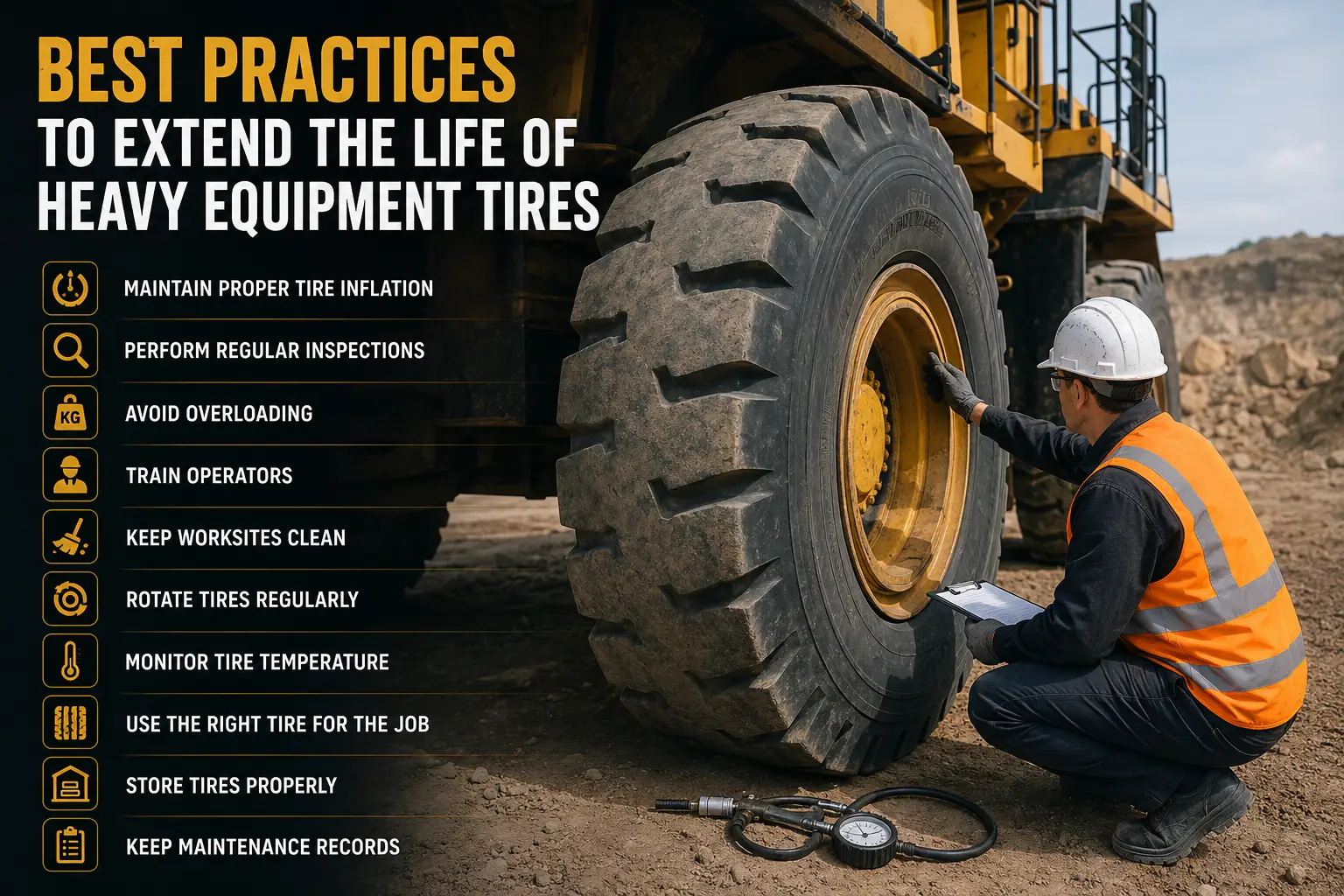
Heavy equipment tires are among the most critical and expensive components of construction, mining, agricultural, and industrial machinery. These tires operate under demanding conditions, carrying heavy loads across rough terrain while being exposed to extreme temperatures, sharp objects, and continuous wear. Proper tire maintenance is essential not only for reducing operating costs but also for improving safety, productivity, and equipment performance. By following best practices, companies can significantly extend the lifespan of heavy equipment tires and maximize their return on investment.
One of the most important practices is maintaining proper tire inflation. Underinflated tires generate excessive heat, increase rolling resistance, and cause uneven wear, while overinflated tires reduce the tire’s contact area with the ground and make them more susceptible to impact damage. Regularly checking and adjusting tire pressure according to the manufacturer’s recommendations ensures optimal performance and longevity.
Routine tire inspections are equally important. Operators and maintenance personnel should inspect tires daily for signs of damage such as cuts, punctures, cracks, bulges, or embedded debris. Early detection of minor issues can prevent costly tire failures and unexpected downtime. Inspections should also include checking valve stems, wheel rims, and tread conditions to ensure overall tire health.
Proper load management plays a significant role in extending tire life. Overloading heavy equipment places excessive stress on tires, leading to premature wear, overheating, and structural damage. Equipment operators should always adhere to the manufacturer’s load capacity guidelines and distribute loads evenly whenever possible. Balanced loading helps reduce uneven tire wear and improves machine stability.
Operator training is another key factor. Skilled operators understand how driving habits affect tire performance. Sudden acceleration, harsh braking, excessive speed, and sharp turns can accelerate tire wear and increase the risk of damage. Training operators to drive smoothly and responsibly helps minimize unnecessary stress on tires and extends their service life.
Maintaining suitable worksite conditions can also contribute to longer tire life. Construction sites, quarries, and industrial yards often contain sharp rocks, metal scraps, and other hazards that can damage tires. Regular site cleanup and route maintenance help reduce the risk of punctures and cuts. Additionally, establishing designated travel paths can minimize exposure to hazardous surfaces.
Tire rotation and alignment should not be overlooked. Uneven wear patterns can develop due to weight distribution, operating conditions, or mechanical issues. Rotating tires according to a maintenance schedule helps ensure even tread wear and maximizes tire utilization. Proper wheel alignment further prevents irregular wear and improves fuel efficiency.
Temperature management is another essential consideration. Excessive heat is one of the primary causes of tire degradation. Operators should avoid prolonged high-speed operation, especially in hot climates, and allow equipment to cool when necessary. Monitoring tire temperatures during operation can help identify potential problems before they lead to failure.
Using the correct tire type for specific applications is equally important. Different operating environments require different tire designs, tread patterns, and rubber compounds. Selecting tires that match the equipment’s working conditions ensures better performance, reduced wear, and increased durability. Consulting tire manufacturers or industry experts can help organizations choose the most suitable tires for their operations.
Proper storage practices are also essential for preserving tire quality. Spare tires should be stored in a cool, dry, and shaded environment away from direct sunlight, chemicals, and ozone-producing equipment. Correct storage prevents rubber deterioration and helps maintain tire integrity until the tires are ready for use.
Finally, implementing a comprehensive tire maintenance program can provide long-term benefits. Keeping detailed records of tire inspections, repairs, pressure checks, rotations, and replacements allows maintenance teams to identify trends and optimize tire management strategies. Modern tire monitoring technologies, such as Tire Pressure Monitoring Systems (TPMS), can further enhance maintenance efforts by providing real-time data and early warnings.
In conclusion, extending the life of heavy equipment tires requires a combination of proper inflation, regular inspections, effective load management, operator training, site maintenance, and proactive monitoring. By adopting these best practices, organizations can reduce tire-related costs, improve operational efficiency, enhance workplace safety, and achieve greater productivity from their heavy equipment fleets.



















 Tubes
Tubes Mobile Soild Tire Installation
 Wheel Rims